Business Plan Guide
 Business Success Guide
 Business Success Seminars
 Business Success Services
 Free Business Consultations
 Business Plan Review
 Business Success Newsletter
 Contact Us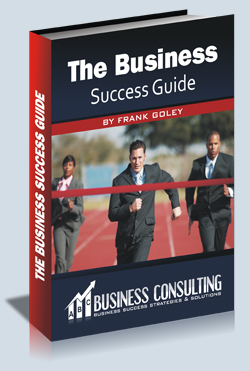
 Testimonials
- “Not only is the frontend of my website great, but I am even more amazed with the backend WordPress customization and CMS. Frank’s web developer customized the WordPress platform into an easy to use tool for me to manage content, add content, send newsletters, and so much more. Frank installed a WP plugin that helps make Search Engine Optimization a snap for me in the future as I create more content, and added another plugin to help the overall performance of the website. It isn’t just the plugins that were installed, but more importantly, how Frank’s web developer customized the plugins and the WP platform for my particular need and use. Really fantastic!” – Randy Velker, Owner, Simple Energy Works [more testimonials]
- "Hello Frank, It is always a pleasure to read your articles. Your expertise is obvious and makes the work seem so easy, yet I agree with you mastering all these techniques takes a lot of time and experience building. This is why your services are so valuable. Thank you for sharing such solid and helpful content. Today we also want to thank you for your awesome presence by our side. Today you are our featured person on our page. Happy New Year Frank, we wish you continued abundance in all its forms! To your continued fabulous success." -- Christiane Lavanoux and Mary Margaret White-Levilain, Life Coaches [more testimonials]
- “Frank Goley with ABC Business Consulting has done a fantastic job in creating a stunning website for my company, Simple Energy Works. Not only is the design inviting, but I am really excited about the sales process strategy and design integrated into the website, which with finesse calls website visitors to take action. This is something that my previous website failed to do well. Frank’s website designers also really did a bang up job in designing my social media properties and created a website within a Facebook Fanpage that is just incredible!” – Randy Velker, Owner, Simple Energy Works [more testimonials]
- “Not only did Frank work closely with me to development these strategies, but he has also implemented these strategies into real world solutions which reflect the strategic direction of my company. The comprehensive planning, consulting and implementation approach ABC Business Consulting offers is quite unique in the marketplace, and I have found it incredibly useful in defining the direction my company needs to take to be successful in this economy and beyond. Thanks Frank for all the help and advice. I look forward to a long term and successful relationship with ABC Business Consulting.” – Randy Velker, Owner, Simple Energy Works [more testimonials]
- "I read this blog post, and I really appreciate this content: Business Trade Credit and Debt Finance. Thanks for useful information." -- John [more testimonials]
- "Hello Frank, Thank you for reminding us of how essential credibility is and how an intelligent use of Testimonials can do wonders in promoting our business. The more visible we become through multiple marketing pipelines that we implement on an ongoing basis, the more business we will generate." -- To your continued success, Christiane Lavanoux, I Game Attitude LLC co-Founder and co-President / Certified Life Coach [more testimonials]
- "Thanks Frank for sharing SOLID & USEFUL content. I learned stuff from your site!" -- John Milton Fogg, Author, The Greatest Networker [more testimonials]
- "I own a premiere event planning and marketing company based in New York City. I've had the pleasure to work with Frank Goley on many projects that I have for my many businesses. He is fast, reliable and very good at what he does. Because I own several companies and websites, I always need excellent content, articles, sales letters, etc. I’ve worked with a ton of writers over the years, but Frank is by far the best!!! I definitely recommend Frank to any business." -- Mario Stewart, President, EMRG Media [more testimonials]
- “After spending some time on the ABC Business Consulting website, I immediately was impressed with the vast array of information and resources that is available, especially the wide range of E-Books which Frank Goley makes available for FREE. Frank is a professional consultant who I highly recommend.” -- Arthur Rego, President, AER Enterprises (Bermuda) [more testimonials]
- "As a result of Frank’s advice, our newly developed website, and the ongoing internet marketing and SEO campaign, we have seen great results, including: our energy monitor product sales have doubled, our solar system business is on track for a banner year with a three-fold increase, our targeted website visitors have increased 1,500%, and our Bounce Rate is an incredibly low 5%! If you want someone to maximize your company’s profitability and increase sales, Frank is the guy to call." – Randy Velker, Owner, Simple Energy Works [more testimonials]
- "I just wanted to express my appreciation for the business plan review service. It has helped tremendously in revising and making the plan attractive to potential investors and helped to eliminate the fatal flaws that could stop it dead in its tracks. The service was very quick and efficient. An absolute must for every entrepreneur or anyone looking for that extra help with a business plan. I eagerly look forward to doing further business in the future and making full use of more of the services offered!" -- Chris Johnson, Saskatchewan, Canada [more testimonials]
- "At the beginning I thought I knew everything about developing a business plan for small and medium size businesses, but when I found ABC Business Consulting to help me prepare this plan, it was a totally different learning experience for me, as this firm showed me that it required a professional staff like ABC Business Consulting to put this plan together with me. I have learned a lot by exchanging ideas and information with ABC and developing my business skills. I thank Frank from ABC Business Consulting for all his help, advice and finally his patience with me as they are very quick in response and completed my Business Plan in time. Well done and great job! I highly recommend ABC Business Consulting and their services." -- Ali Al-Jazairi, Yas Marine (Business Plan Level IV Client) [more testimonials]
- “I am trying to grow my solar energy and energy efficiency company in a recession. It’s a challenge! I decided I needed a comprehensive approach and assistance from an experienced consultant. I searched on the internet for “business consultant” and found Frank Goley of ABC Business Consulting. After a few discussions with Frank on what I needed and what I was looking for, he presented to me a comprehensive business success solution that included:” Development and implementation of a Business Plan, Marketing Plan and Strategic Plan Business Success Analysis & Recommendations Intensive Onsite Business Consulting Design and Development of a new Website to include a custom WordPress Content Management System Search Engine Optimization Internet Marketing Solutions – Randy Velker ... [more testimonials]
- "I would like to thank you Mr. Goley for making the extra effort with my business plan. The world of business is cut throat and the slightest misstep by an inexperienced entrepreneur can lead to a good idea becoming a waste of time and energy. Mr. Goley has the expertise and knowledge that allows for your great idea to become a great business. He told me what I needed to hear, not what I wanted, as well as, pointing me in the right direction for my future business endeavors." -- Foster Fox, Entrepreneur [more testimonials]
- "I have been working with Frank Goley of ABC Business Consulting for several months now. The results and benefits have been exceptional. We have been able to significantly grow our business through the business plan implementation, consulting recommendations, and web marketing strategies that Frank has worked closely with me in developing and implementing. Also, the opportunity to consult with Frank at anytime about any business issue or opportunity has been great- he has been a great asset to our business planning and decision making." – Randy Velker, Owner, Simple Energy Works [more testimonials]
- “How do you align your resources, your team, your partners, and your vision for success if you don’t have a common goal or a roadmap to reach it? Of course you have a business plan, but odds are it died a long time ago, relegated to a dusty drawer. If your business plan is not a living, breathing, and valued document; the daunting task of aligning your business is made all the more difficult by the vast array of conflicting agendas in your organization. Frank Goley brings a simple and straightforward approach to building and maintaining an active business plan - that roadmap for success- upon which your organization can align its efforts. He is an engaging speaker / presenter / consultant who has also written an excellent guide which can help any organization navigate the process of ... [more testimonials]
- "The ABC Business Consulting Group has created a great master list and guide to creating a full business plan. The guide includes not only section headings for a business plan, but they have also created a great series of guiding questions around each one of these subsections. My recommendation is spend the US$20 and download a copy and keep as a planning companion." -- Mark Robotham, Growth Management Consulting Ltd [more testimonials]
- “Frank, I reviewed the information you provided regarding business turnarounds. I was impressed by the level of detail and the elements that dealt with the leadership qualities of the business turnaround consultant and team. I have reviewed a great deal of literature on the topic and have interviewed a number of turnaround experts. Few have addressed the level of detail that you have provided and none have addressed the requisite qualities of the turnaround team. Thanks again for providing this information!” -- Dan Anderson, MBA, CBA, Director, Small Business Development Center, Helena, MT [more testimonials]
- "I am extremely impressed with the vast amount of knowledge and resources available through Frank Goley and the team at ABC Business Consulting. In particular, the web site information available regarding business turnaround strategies is exceptional and clearly identifies the challenges facing those experiencing a distress situation. This is an excellent resource!" –Vincent J. Palombo, Assistant Professor of Management, Chancellor University. [more testimonials]
- “Frank Goley's presentation on strategic business planning was very informative and will be of great help to our firm as we work through a new business plan.” -- Ryan Martin, Director of Business Development, Accumark, Inc. [more testimonials]
- "After locating Frank Goley on LinkedIn, I recruited Frank to speak at SMPS Virginia's 2011 Planning Workshop. Frank was one of the most popular speakers/experts (out of eight total speakers). Clearly a leader in his field, Frank's professionalism and expertise was matched with a great presentation style. I would definitely recommend Frank to present to your organization!" -- Tracey Gould, Board Member/Vice President/President-Elect for Society for Marketing Professional Services (SMPS) (Virginia) and Director of Marketing, Baskervill. [more testimonials]
- "We started with an idea that we felt would better the citizens of the surrounding communities. So we began to get acquainted with the local entrepreneurs, to find out how they started, and how their vision and dream became the success that it is today. Everyone’s success story started out the same way, they had an excellent business plan. So we started working on our business plan, and after months of trying to develop it, we knew we were in over our head. We turned to the internet and spoke with company after company about developing our business plan with the same outcome: a lot of money! ABC Business Consulting not only offered reasonable pricing, but also Frank took the time to examine and explain every aspect of our up and coming business to make sure we understood what we were ... [more testimonials]
- "Most small business owners can appreciate the value of business planning. The missing piece is an easy to use, comprehensive approach to the process. Frank Goley's Comprehensive Business Planning Guide and Workbook supplies the missing piece by providing a clear explanation of the all the components of an effective business plan. Plus, his Business Planning Guide and Workbook includes a plug in format for your business data. For those business owners dedicated to more profit, Frank Goley's Comprehensive Business Planning Guide and Workbook is a perfect fit." -- Don Osborne, The Profit Puzzle [more testimonials]
- "Over the past few months I have hired Frank Goley to write many articles and blog posts for my company and have been more than satisfied with his work. Frank is a fast study, always delivers the project on time and very easy to work with. If you need a top writer for any topic, I highly recommend Frank Goley for the job.” -- Vince Martinez, Partner FYI Media Services, CEO 123 Web Connect [more testimonials]
- “Frank, I reviewed the information you provided regarding business turnarounds. I was impressed by the level of detail and the elements that dealt with the leadership qualities of the business turnaround consultant and team. I have reviewed a great deal of literature on the topic and have interviewed a number of turnaround experts. Few have addressed the level of detail that you have provided and none have addressed the requisite qualities of the turnaround team. Thanks again for providing this information!” -- Dan Anderson, MBA, CBA, Director, Small Business Development Center , Helena, MT [more testimonials]
- "One of the keys to succeeding in the art of social media placement is good copy. Good copy is a combination of affordability, creativity, and timeliness. Frank Goley delivers all three without fanfare or fuss." -- Allan Matthews, Owner, FYI Media Services [more testimonials]
- “Frank, thank you for a very good program and presentation. The Evansville Executive Forum enjoyed your talk, and it provoked a lot of conversation about their use or none use of business plans. Again, thank you. -- Jack Barner, University of Evansville, Vice President for Institutional Advancement [more testimonials]
- “ABC Business Consulting is now implemented the off page search engine optimization and internet marketing strategy, and I look forward to the increased business this website is bound to create for me. Even in the few short days since my new website went live, I am already getting great rankings where I had none before. My website is going to be a marketing machine, even in this recession! Thanks for going the extra mile and doing the “little things” that really add up to great value and results!” – Randy Velker, Owner, Simple Energy Works [more testimonials]
- "Thank you Frank Goley for sharing such an interesting article on Real Time Search and Social Media Convergence with links to search engine optimization tactics and suggesting strategies and techniques to support our business’s marketing goals." -- Christiane Lavanoux, I Game Attitude LLC co-Founder and co-President / Certified Life Coach [more testimonials]
- "I was very pleased with my business plan. Frank Goley was there for me every step of the process and willing to help me with anything. Besides being very patient with me, they were also very quick to respond. ABC Business Consulting made my idea come to life. I will definitely do business with them again." -- Anthony Alvarez, Restaurateur [more testimonials]
- “I'm working on a thesis concerning strategies about Business Turnaround, and I find your E-Books to be very helpful, especially "Small Business Recession Tactics" and "Saving a Business in Trouble". I would appreciate if you gave me your permission to make a reference on these E-Books for my thesis work. Thank you very much for your help!” -- Margarita Economidou, Open University of Cyprus. [more testimonials]
- "We really needed help with our business plan writing. We actually did not think Frank Goley was going to have time to respond to our request but he did. Although our business plan was in its initial draft version, Frank was honest to point out that the business plan needed a lot of work. At a high level, Frank suggested the following to be considered: Correct formatting Follow the SBA guidelines Strong marketing research and analysis We certainly appreciate Frank for contributing his time and effort to help us with the most important stage of our business formation – writing the business plan. Thanks again for all the help." -- BB [more testimonials]
- "Thank you very much for all of your hard work. We are very pleased with the final result of the Marketing Plan that was prepared for us. Frank Goley with ABC Business Consulting was extremely prompt to answer all of our questions even after business hours. Now that is customer service! Again I want to say thank you for a job well done, and you can use us as a reference for any future clients. We will definitely look to utilize ABC Business Consulting services in the future as we build our company. Thanks!" -- Doug Walker, EMT-P, President, MPACT [more testimonials]
- “Moreover, Frank re-worked and developed new content for the website, then optimized the content for the search engines. In as little as a few days, my website has already starting ranking as a result of Frank’s content and search engine optimization work on the website. Frank also came up with the idea to have a Solar Case Studies section on the website, which proves out how solar energy systems make a lot of financial sense, and it adeptly showcases our expertise in designing and installing solar systems.” – Randy Velker, Owner, Simple Energy Works [more testimonials]
- "Working with Frank Goley made me realize all the missing gaps that existed in my mind about the business I wanted to create. He is very thorough, knowledgeable, patient and understanding. If you want to create a final product that covers all of your bases and does not leave out any detail, you must work with Frank. Most people writing business plans have all the information in their minds, but don't have a way to get it out. Frank uses a methodical approach to gathering information from you to complete the plan." -- Level 4 Business Plan Customer [more testimonials]
- “Frank Goley is knowledgeable and dependable. When working on a project he sees everything through to the end and makes sure that the customer is happy with the results. Frank provides each customer and vendor with a personal level of support.” -- Dave Wallace, IAS Corp / Build My Product [more testimonials]

Blog
Test Post 3October 7, 2016 by admin Test Post 3  Posted in Uncategorized. Comment Test Post 2October 7, 2016 by admin Test Post 2 Posted in Uncategorized. Comment Test Post 1October 7, 2016 by admin Test Post 1 Posted in Uncategorized. Comment |
|
 Articles
 Blog
Blog


Our services are centered around your Business Success. We offer business consulting,
business coaching, and business turnaround consulting. We develop and implement
business plans, marketing plans, strategic plans, loan packages and investment
overviews. Full website design, development, seo and marketing services. Click the
button below to learn more.
|


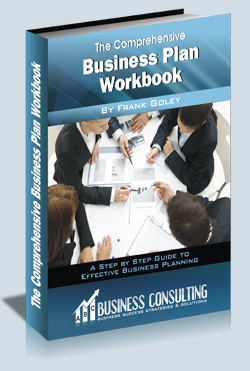
Written by a 20+ year veteran in business planning. This guide includes pivotal
business planning tips and costly mistakes to avoid. Includes a step by step
workbook that provides a simple roadmap to developing a successful business plan
for any purpose, including funding business plans, investor plans, vc plans,
lender plans, success plans, joint venture plans, and more!
|


Frank Goley provides experienced and entertaining seminars and presentations on business
success strategies and solutions. Topic areas include: business planning, marketing,
business turnarounds, recession tactics, search engine optimization, inbound marketing,
internet marketing, running and growing a successful business, strategic planning ...
|


The Business Success Guide has over 30 in-depth sections on the important knowledge
areas necessary to start, manage, or grow a successful business. Learn from the real
world success of Frank Goley, an experienced Entrepreneur, Business Owner and
Consultant, who has many years experience in starting, growing, and turning around
small and medium size companies.
|